

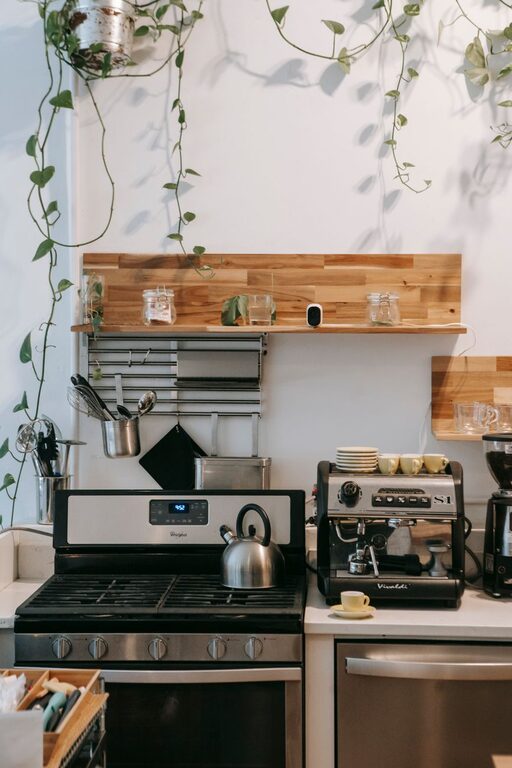
A small kitchen does not have to limit what you can cook. With the right tools, even a compact space can support everyday meals, baking projects, and efficient food preparation. The key is to choose items that serve several purposes, fit easily into cabinets or drawers, and are comfortable to use.
Instead of filling your kitchen with single-purpose gadgets, focus on dependable basics. A carefully selected collection can help you prepare ingredients, cook safely, store leftovers, and keep surfaces organized.
Start With Versatile Essentials
When space is limited, every tool should earn its place. Look for kitchen items that can perform more than one task without taking up too much room.
Chef’s Knife
A good chef’s knife is one of the most useful tools in any kitchen. It can chop vegetables, slice fruit, mince herbs, and portion many types of food. Choose a knife that feels balanced in your hand and has a comfortable handle.
One medium-sized chef’s knife is often more useful than a large collection of specialized knives. A small paring knife is also helpful for peeling, trimming, and handling smaller ingredients.
Cutting Board
A sturdy cutting board protects your counters and gives you a stable surface for food preparation. A medium-sized board can work well in a small kitchen because it provides enough room for chopping without taking over the counter.
Consider a board with a juice groove for cutting juicy foods. A lightweight, reversible board can also be convenient because one side may be used for produce and the other for general preparation. Store it vertically against a wall or inside a cabinet to save space.
Measuring Cups and Spoons
Measuring tools are useful for cooking and especially important for baking. A compact set of nesting measuring cups and spoons takes up less room than separate pieces.
For liquids, a small measuring jug with clear markings is practical. Choose a heat-resistant version if you plan to measure warm ingredients or pour sauces.
Choose Cookware That Does More
Cookware often takes up more space than utensils, so select pieces that can handle several types of meals.
A Medium Saucepan
A saucepan is useful for cooking grains, heating soup, making sauces, boiling eggs, and preparing small portions of pasta. A size between two and three quarts is often practical for a small household or compact kitchen.
A lid helps retain heat and allows the pan to be used for slow simmering. If cabinet space is limited, choose a saucepan with a lid that fits securely and a handle that does not extend too far.
A Skillet
A skillet can be used for sautéing vegetables, cooking eggs, browning ingredients, and reheating leftovers. A medium skillet is usually large enough for everyday meals while remaining easy to store.
A skillet with gently sloped sides can make stirring and serving easier. If you prefer cookware that can move from the stovetop to the oven, check the manufacturer’s instructions to make sure the handle and materials are suitable.
A Compact Pot or Dutch Oven
A small pot with a lid can handle soups, stews, rice dishes, and one-pot meals. A compact Dutch oven is another useful option if you want a piece of cookware that holds heat well and can be used for slow cooking.
You may not need both a large stockpot and a Dutch oven. For a small kitchen, choose the piece that best matches the meals you prepare most often.
Sheet Pan
A sheet pan is useful for roasting vegetables, baking cookies, reheating food, and preparing simple one-pan meals. A smaller half-size or quarter-size pan may fit a compact oven better than a full-size model.
A rimmed sheet pan is generally more versatile because it can contain juices and smaller ingredients. It can also be paired with parchment paper or a reusable baking mat to simplify cleanup.
Add Practical Prep Tools
Small preparation tools can make daily cooking easier without requiring much storage space.
Mixing Bowls
A set of nesting mixing bowls is ideal for a small kitchen. They can be used for combining ingredients, washing produce, serving salads, and storing prepared food temporarily.
Stainless steel bowls are lightweight and durable, while glass bowls can be used for mixing and, in some cases, heating. Choose a set with at least one medium bowl and one larger bowl.
Box Grater
A box grater takes up less space than several separate grating tools and can handle cheese, vegetables, citrus zest, and other ingredients. Look for a model with stable feet or a broad base.
If cabinet space is extremely limited, a flat handheld grater may be easier to store. However, a box grater often offers more functions in one tool.
Fine Mesh Strainer
A fine mesh strainer is useful for rinsing grains, draining small ingredients, sifting dry ingredients, and preparing smooth sauces. It can also serve as a simple tool for dusting powdered sugar over baked goods.
Choose a size that fits comfortably over your most-used bowls and saucepans.
Peeler and Kitchen Shears
A vegetable peeler saves time when preparing potatoes, carrots, apples, and other produce. Kitchen shears can trim herbs, cut food packaging, portion flat foods, and handle tasks that are awkward with a knife.
Look for shears that come apart for cleaning if possible. A peeler with a simple, comfortable design is usually easier to store and replace than a complicated model.
Make Cleanup Easier
Efficient cleanup is especially important in a small kitchen because clutter can build up quickly.
Silicone Spatula
A flexible silicone spatula is useful for scraping bowls, folding ingredients, stirring sauces, and spreading mixtures in baking pans. Choose one that is heat resistant and has a sturdy handle.
Tongs
Tongs help turn food, serve salads, toss pasta, and handle ingredients safely. A locking pair can take up less space in a drawer.
Compact Dish Rack
If you do not have a dishwasher, a foldable or narrow dish rack can keep washing areas organized. Some designs fit over part of the sink, leaving counter space available when the rack is not in use.
A washable drying mat is another space-saving option for kitchens that need occasional drying support rather than a permanent rack.
Use Space-Saving Storage Tools
Storage tools can improve both organization and food freshness.
Stackable Food Containers
Choose containers that nest when empty and stack securely when full. Clear containers make it easier to see what you have, while uniform shapes use cabinet and refrigerator space more efficiently.
A small collection of different sizes is usually more useful than many containers with unusual shapes. Select containers with secure lids and check whether they are suitable for the refrigerator, freezer, microwave, or dishwasher.
Measuring Storage Jars
Small jars can hold grains, spices, nuts, tea, and other pantry ingredients. Matching jars create a tidy appearance and make limited shelves easier to organize.
Use labels only when they are helpful. Clear containers often allow you to identify contents at a glance, reducing the need to open several jars.
Magnetic or Wall-Mounted Storage
If cabinets and drawers are full, use vertical space. A magnetic strip can hold selected metal tools, while hooks or a narrow rail can store utensils. Before installing anything, make sure it is securely mounted and placed away from heat or splashing water.
Tools Worth Skipping
Small kitchens benefit from careful editing. Many single-purpose gadgets are used rarely and occupy valuable space. Before buying one, ask whether it replaces a tool you already own, whether you will use it regularly, and whether it is easy to clean.
For example, a chef’s knife may replace several chopping gadgets, and a box grater may handle tasks assigned to multiple small devices. Borrowing or testing an item before purchasing can also help prevent unnecessary clutter.
Build Your Collection Gradually
You do not need to buy everything at once. Start with a chef’s knife, cutting board, saucepan, skillet, sheet pan, mixing bowl, measuring set, and a few basic utensils. Add tools based on the meals you regularly prepare.
The best small-kitchen setup is practical, flexible, and easy to maintain. By choosing multipurpose tools, using vertical storage, and keeping only what you need, you can create an efficient cooking space that feels comfortable rather than crowded.